
In today’s eco-conscious world, water consumption matters more than ever. Whether for offices, homes, or public spaces, bottled water is a convenient solution for hydration. However, not all bottled water options have the same environmental impact.
There is a growing debate between large reusable water bottles (like 19-litre bottles) and small single-use bottles (such as 500 ml). Which is greener? How does each affect plastic waste, transport emissions, and sustainability?
In cities like London, where eco-friendly practices are increasingly encouraged, many households and businesses are shifting toward bulk water solutions, such as a 19-litre water bottle, rather than buying multiple small bottles. Let’s explore why.
The Environmental Problem with Small Bottled Water
Small bottled water, especially 500 ml PET bottles, is designed for convenience, but this convenience comes with a high environmental cost.
Globally, more than one million plastic bottles are purchased every minute, yet less than half are recycled. The remaining bottles often end up in landfills, oceans, or waterways.
These bottles are typically made from PET plastic, which can take hundreds of years to break down in the environment. In fact, plastic bottles may take up to 450–500 years to decompose, contributing significantly to long-term pollution.
There are several environmental challenges associated with small bottled water:
1. Excess Plastic Waste
Every small bottle contains plastic packaging that is often used once and then discarded. When multiplied by thousands or millions of bottles, the amount of plastic waste becomes enormous.
2. Higher Carbon Footprint
Producing plastic bottles requires energy and fossil fuels. Manufacturing, filling, packaging, and transporting each bottle contribute to greenhouse gas emissions.
3. Additional Packaging Waste
Small bottled water typically requires additional materials such as:
- shrink-wrap plastic
- cardboard cartons
- pallet wrapping
These materials create further waste that ends up in landfills.
4. More Transport Emissions
Delivering thousands of small bottles requires more transportation space and more trips, increasing fuel consumption and emissions.
Understanding the 19-Litre Water Bottle System
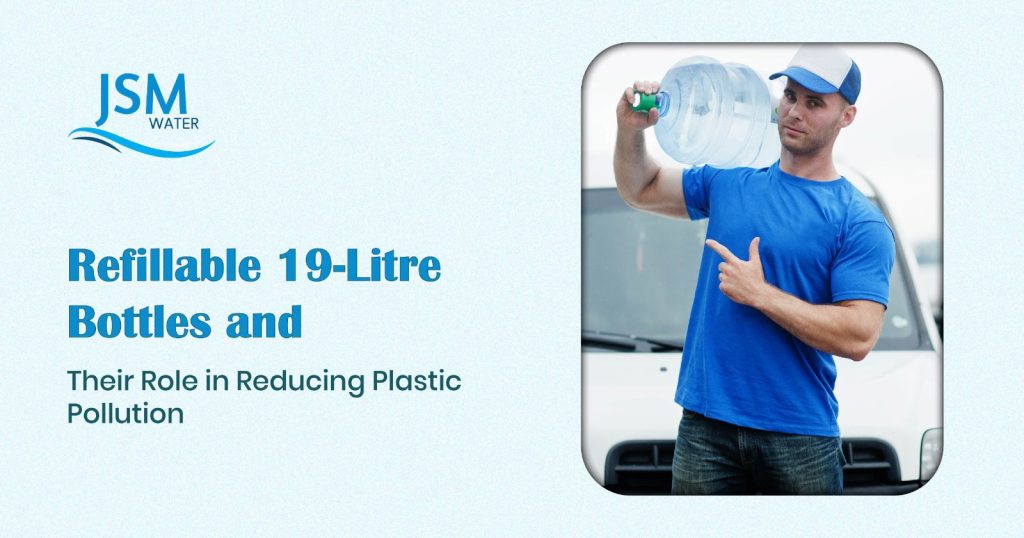
Large water bottles, often used with water coolers, work very differently from small single-use bottles. A 19-litre water bottle in London is typically designed for multiple reuse cycles.
Instead of being thrown away, these bottles are collected, cleaned, sanitised, and refilled. This circular system significantly reduces waste.
Reusable bulk bottles are part of a closed-loop delivery model, where bottles are repeatedly returned and reused until the end of their lifecycle.
This approach dramatically lowers the environmental footprint compared with disposable bottles.
Plastic Comparison: 19L Bottle vs 500 ml Bottles
Let’s look at a simple comparison.
Scenario 1: Small Bottles
To equal 19 litres of water using 500 ml bottles, you would need:
38 small plastic bottles
Each bottle contains plastic packaging, caps, and labels. Even if recycled, the overall plastic consumption remains significantly higher.
Scenario 2: One 19-Litre Bottle
With bulk water systems, a single large bottle replaces dozens of smaller bottles.
Because these bottles are reused repeatedly, the plastic is used more efficiently and does not become waste after a single use.
Research also shows that larger bottles generally have lower carbon content per litre compared to smaller bottles, largely because packaging material is used more efficiently.
In simple terms:
| Water Option | Bottles Needed | Plastic Waste |
| 500 ml bottles | 38 bottles | High |
| 19L reusable bottle | 1 bottle | Very low |
This is one of the biggest reasons why many businesses now prefer bulk water systems.
Transportation Efficiency and Carbon Emissions
Another important environmental factor is transportation.
Water is heavy, and transporting many small bottles requires more packaging space and more fuel. When thousands of small bottles are transported, trucks carry large amounts of packaging rather than just water.
Bulk bottles, however, improve logistics efficiency.
Delivering large reusable bottles means:
- fewer bottles per litre of water
- fewer vehicle trips
- lower emissions per litre delivered
Studies show that delivering water in bulk bottles results in lower transport emissions per litre compared with small bottled water.
For companies offering water delivery in London, this approach also improves supply efficiency and reduces waste.
The Role of Reuse and Recycling
One of the strongest environmental advantages of large bottles is reuse.
Reusable bottles can be:
- collected after use
- sanitised
- refilled multiple times
- recycled only after years of use
This significantly lowers the demand for producing new plastic bottles.
In contrast, small bottles are typically single-use. While recycling helps, global recycling rates remain relatively low, meaning many bottles still end up in landfills or oceans.
Environmental Benefits for Homes and Offices
Switching to bulk water bottles offers several sustainability advantages:
- Reduced Plastic Consumption: A single 19-litre bottle replaces dozens of disposable bottles.
- Lower Packaging Waste: Bulk systems eliminate shrink wrap, cartons, and secondary packaging.
- Reduced Carbon Footprint: Fewer deliveries and fewer bottles mean lower emissions.
- Encourages Sustainable Habits: Using refillable bottles promotes long-term environmental responsibility.
For offices, especially, this approach helps reduce waste generated by employees buying individual bottles daily.
The Growing Demand for Sustainable Water Solutions in London
Sustainability is becoming a key priority for homes and businesses across London.
Many organisations now prefer bulk hydration systems such as:
- spring water delivery in London
- water cooler systems
- Reusable water bottle programs
As awareness grows, companies and households are moving away from single-use bottles and choosing more environmentally responsible options.
Reliable natural water suppliers in London now offer convenient delivery services that help reduce plastic waste while ensuring access to clean drinking water.
For households that want healthy hydration, natural mineral water bottles in London delivered in larger reusable containers are increasingly popular.
How JSM Water Supports Sustainable Hydration
Businesses looking for eco-friendly hydration solutions can rely on JSM Water, a trusted provider offering reliable water delivery in London and the surrounding areas.
JSM Water supplies high-quality drinking water through efficient delivery systems designed to reduce plastic waste and support sustainability. Customers can choose from options such as 19-litre water bottles in London, water cooler dispensers, and regular delivery plans suitable for homes and offices.
By focusing on reusable bottles and efficient delivery logistics, JSM Water helps customers minimise environmental impact while enjoying convenient hydration solutions. Whether it’s spring water delivery in London or a bulk bottled water supply, their services support greener water consumption.
So, Which Option Is Greener?
When comparing small bottled water vs large reusable bottles, the environmental advantages of bulk systems are clear.
Using a 19-litre water bottle in London provides many benefits, such as:
- less plastic waste
- lower carbon emissions
- fewer deliveries
- reusable packaging
- reduced landfill impact
While small bottles are convenient for short-term use, their environmental footprint is significantly higher.
For individuals, families, and businesses aiming to reduce plastic waste and adopt sustainable habits, switching to large reusable water bottles is one of the simplest and most effective steps.
Frequently Asked Questions (FAQs)
1. Are 19-litre water bottles more environmentally friendly than small bottles?
Yes. A single 19-litre bottle replaces dozens of small bottles, reducing plastic waste, packaging materials, and transportation emissions.
2. How many 500 ml bottles equal a 19-litre water bottle?
Approximately 38 small 500 ml bottles are required to match the volume of one 19-litre bottle.
3. Do reusable water bottles reduce plastic waste?
Yes. Reusable bottles are collected, sanitised, and refilled multiple times, significantly reducing the need for new plastic production.
4. Is spring water delivery in London environmentally friendly?
When delivered in reusable bulk containers, spring water delivery in London can be more sustainable than purchasing multiple single-use bottles.
5. Why are many offices switching to bulk water delivery?
Bulk water systems reduce plastic waste, lower operational costs, and provide a consistent supply of drinking water while supporting environmental sustainability.